





In new research, Li Azinovic-Yang, John D. Kepler, Ava E. Speros, and Christopher R. Stewart find that over the last two decades, companies in the United States have grown to expect customer relationships to last longer, mostly due to higher costs associated with switching to competitors’ products. Over the long term, this lock-in reduces competition and consumer welfare.
In a 2025 earnings call, Sirius XM executives discussed a development that they expected would help the company retain subscribers: the United States Court of Appeals for the Eighth Circuit had suspended in July 2025 the Federal Trade Commission’s “click-to-cancel” rule. The rule, which the FTC adopted in October 2024, would have made canceling subscriptions as easy as signing up for them. “With the suspension of the federal regulation on click to cancel,” an executive explained, “we should see a slightly better outcome as a result of not having that in place.”
A few years earlier, an executive at online health insurance marketplace eHealth described a different source of customer retention. The company had invested in a tool that required seniors to enter information about their prescriptions and doctors. The executive reasoned that this investment of customers’ time could itself discourage them from leaving. A senior who had entered all that information, the executive said, would be “less prone to … switch when they would have to repeat all of that information over the phone.”
These comments illustrate an increasingly important feature of the modern economy. Firms do not simply compete to win customers; they invest heavily in keeping them, sometimes through the introduction of frictions to prevent customers from leaving when they want to. In a new paper, we show that firms expect their customer relationships to persist much longer than they did two decades ago. That may be good for firms and, in some cases, their customers, but the downside is that when customers become harder to win away, competition weakens and all customers lose in the long term.
Firms expect customer relationships to last longer
Measuring expectations for how long customers will stick with a company is not straightforward because companies rarely disclose how long they expect their customer relationships to last. Mergers and acquisitions, however, provide a unique window into them. When a company acquires another business, accounting rules require it to value the acquired customer relationships and estimate their “useful life”: the period over which those relationships are expected to generate economic benefits. These estimates incorporate information about retention, churn, renewal probabilities, purchasing patterns, contracts, competition, and other factors affecting how long customers are expected to remain.
We collected these estimates for nearly 9,500 acquisitions between 2002 and 2024, involving approximately $8 trillion in acquired assets. The trend is striking.
Figure 1. Change in Expected Customer Useful Life
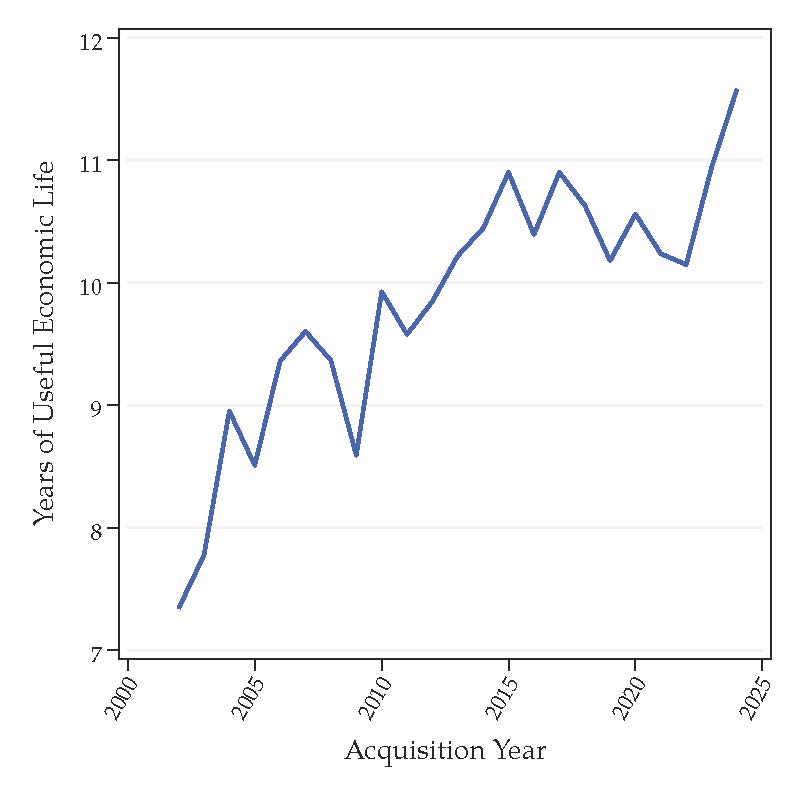
In 2002, firms expected an acquired customer relationship to last, on average, about 7.7 years. By 2024, that figure had increased to roughly 11.5 years—an increase of about 50%. Moreover, the rise is not confined to technology companies or other industries commonly associated with subscriptions and product ecosystems that require customers to replace several products, like a Mac, iPhone and Apple Cloud, to move to another company’s products. It appears across most major sectors of the economy.
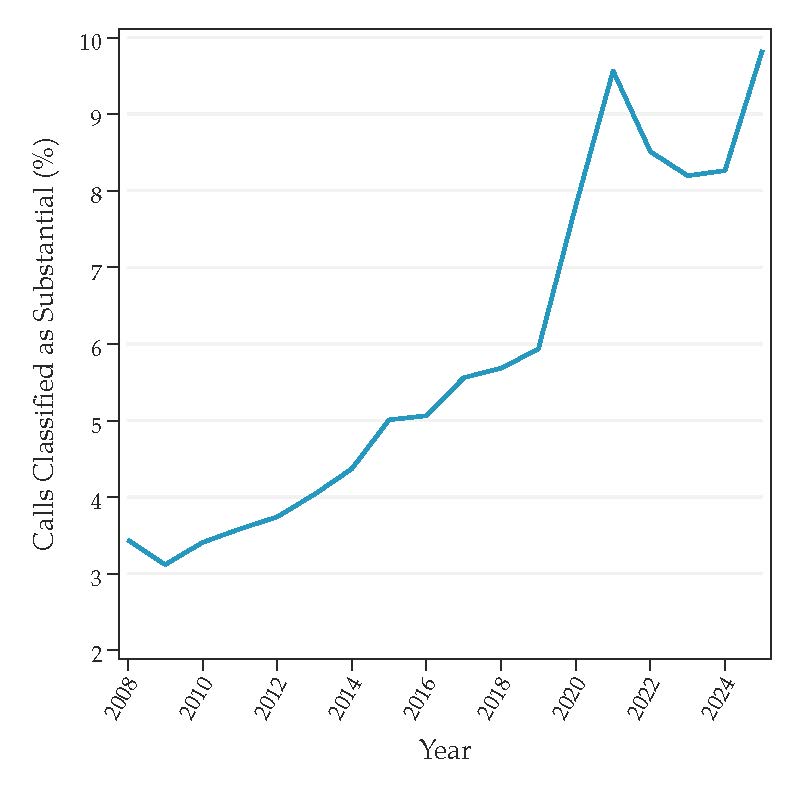
We find a similar pattern when we look beyond acquisitions. We analyzed more than 200,000 earnings calls from U.S. public companies between 2008 and 2025 and measured the extent to which executives discussed establishing and maintaining durable customer relationships. In 2008, customer durability was a substantial theme in about 3.5% of earnings calls. By 2025, that share had nearly tripled to almost 10%.
Figure 2. Change in Earnings Calls Referring to Customer Relationship Durability
Together, these two very different sources point to the same conclusion: firms increasingly expect customer relationships to persist and increasingly emphasize establishing and maintaining those relationships in discussions with investors.
Why do firms expect customers to stay longer?
One possibility is that the rise in customer durability reflects improvements in customer satisfaction. Better products and services should produce more loyal customers and, in turn, lead firms to expect those relationships to last longer.
There is some evidence for this explanation, but not enough to account for the magnitude of the change. The American Customer Satisfaction Index increased by only about 7% between 2002 and 2024, compared with a 50% increase in the expected durations of customers’ useful lives for firms.
Another possibility is that firms are increasingly using strategies that make it more difficult or costly for customers to leave.We examined earnings calls in which customer durability is a central topic and identify discussions of practices that may impede switching or increase customers’ dependence on the firm. About 15% of these calls discussed such retention practices. Among the most pronounced cases were contractual restrictions, bundling and ecosystem lock-in, and switching costs. These accounted for nearly three-quarters of the mechanisms to extend customer useful lives that we identify.
The Sirius XM and eHealth comments put these classifications into context. Other executives drew the connection to customer lock-in even more directly. In a 2019 earnings call, U.S. Silica, a minerals producer, described efforts to become more embedded in its customers’ supply chains, explaining that doing so “really locks in the business” and makes it “much more difficult for customers to switch and go to someone else.” These examples highlight an important distinction. A firm may expect a customer to stay because of the quality or value of its product. But it may also expect the customer to stay because canceling is difficult, switching requires reentering information, products are bundled together, or the customer has become deeply embedded in an ecosystem. Both can produce expectations of durable customer relationships, but their implications for competition can be very different.
When durable customers weaken competition
Competition depends not only on how many firms operate in a market, but also on how much business is actually up for grabs. If customers are willing and able to switch, an entrant with a better product or lower price has an opportunity to take business from incumbents. If customers are tied to long-lasting relationships, that opportunity shrinks.
We formalize this intuition in a model that builds on the influential work of Ufuk Akcigit and Sina Ates by introducing customer durability into their step-by-step innovation framework. As customer relationships become more durable, incumbent market leaders can retain a larger share of their customers even when charging higher prices than their rivals. This allows leaders to raise prices and earn greater profits while reducing the pool of “contestable” customers available to competitors and potential entrants. With fewer customers up for grabs, market entry for new firms becomes less attractive and competitive pressure on incumbents weakens. Greater customer durability can therefore simultaneously increase incumbents’ market power and slow the reallocation of economic activity toward new firms.
Our empirical evidence is consistent with these predictions. Firms that expect more durable customer relationships subsequently experience higher profit margins and capture a larger share of industry profits. More strikingly, customer durability predicts changes in industry structure. Industries in which firms report longer-lived customer relationships become more concentrated over the following years, while the entry and exit of firms in the market declines.
This forward-looking relationship is not captured by the Herfindahl–Hirschman Index (HHI), a widely used measure of industry concentration. We find that an industry’s current HHI does not predict further increases in concentration; if anything, industries with a higher HHI tend to become less concentrated over time. The expected durability of customer relationships, by contrast, helps identify industries in which concentration will subsequently rise. Customer durability may therefore reveal emerging competitive risks before they appear in conventional measures of market structure.
From product markets to workers and innovation
The consequences of greater customer durability may extend beyond product-market competition. When customers are harder to win away from incumbent firms, fewer customers are available to support new and expanding businesses. That can slow the reallocation of economic activity across firms, including the movement of workers. Young firms are particularly important for job creation and wage growth, so weaker entry can mean fewer opportunities for workers to move from established firms to new and growing ones.
Our evidence is consistent with this mechanism. Industries in which firms expect customer relationships to last longer subsequently experience less job reallocation. We also find slower wage growth, suggesting that the benefits firms receive from more durable customer relationships do not necessarily flow through to workers.
Customer durability can also reshape firms’ incentives to innovate, but here the effects are more nuanced. Some durability can encourage innovation: if a firm expects to retain its customers, an innovation that makes it a market leader can generate profits for longer, increasing the payoff to investing in R&D. But as customer relationships become increasingly durable, this benefit eventually gives way to another force. Market leaders become more insulated from rivals and potential entrants, reducing the need to innovate to protect their position.
Consistent with this tradeoff, customer durability is associated with greater innovation at first, but the relationship reverses once customer relationships become sufficiently durable. Beyond that point, firms with more durable customer relationships produce fewer patents, receive fewer forward citations, and spend less on R&D. Customer durability can therefore initially strengthen incentives to innovate while eventually weakening the competitive pressure that makes continued innovation necessary.
Implications for competition policy
Our findings suggest that competition policy should pay attention not only to how many firms operate in a market, but also to how easily customers can move among them. Conventional concentration measures provide a snapshot of market structure. They may miss a more forward-looking source of market power: an incumbent’s ability to make its customers difficult for rivals or entrants to win away. Switching costs, subscription practices, loyalty programs, and ecosystem integration can therefore shape not only who serves customers today, but also whether new competitors can enter, grow, and innovate tomorrow.
Over the past two decades, U.S. companies have come to expect their customer relationships to last substantially longer. When customer retention reflects better products and services, durability can be a sign of healthy competition. But when it reflects barriers to switching, it may help explain why U.S. firms have become more profitable, industries more concentrated, and the economy less dynamic.
Author Disclosure: The author reports no conflicts of interest. You can read our disclosure policy here.
Articles represent the opinions of their writers, not necessarily those of the University of Chicago, the Booth School of Business, or its faculty.
Subscribe here for ProMarket’s weekly newsletter, Special Interest, to stay up to date on ProMarket’s coverage of the political economy and other content from the Stigler Center.