




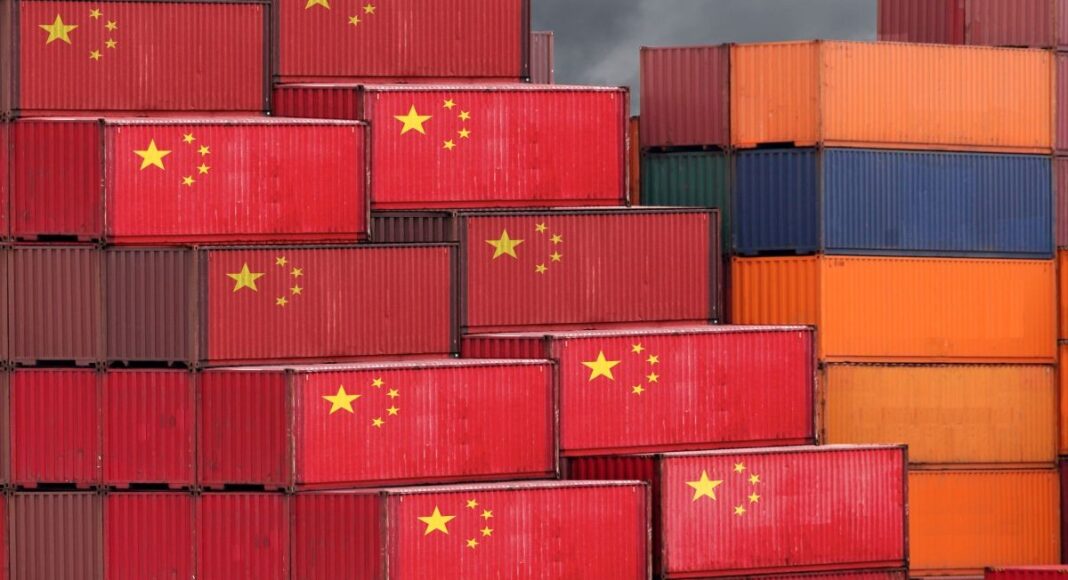

The global economy is in the early stages of a second China shock as the Chinese economy moves up the manufacturing value chain to produce advanced technology for export. China’s advantage lies in government subsidies and an artificially suppressed exchange rate. If advanced economies in the West are to avoid the repetition of job loss and continued trade deficits witnessed over the last two decades, or the pyrrhic policies like tariffs implemented to address these harms, they must pursue institutional change, writes Joshua Banerjee.
The most revealing feature of June’s G7 summit was not what world leaders addressed, but rather what they failed to address: the problem of persistent and surging trade imbalances in the world economy. Driven above all by China’s swelling export surplus, which is buttressed by a chronically undervalued currency, this issue of paramount importance to global economic stability received little meaningful attention. This omission is particularly striking given French President Emmauel Macron’s stated desire to use France’s presidency of the G7 to confront the gnawing question of global imbalances. Leaders departed Évian-les-Bains having accomplished little beyond issuing stuffy and predictable communiqués.
The reluctance to confront this issue comes at an inopportune moment. Economists are increasingly warning of a “China Shock 2.0.” The first China shock followed China’s accession to the World Trade Organization in 2001, unleashing a wave of low-cost manufactured imports that transformed global trade and hollowed out industrial communities across much of the advanced world. Estimates of American job losses from rising Chinese import competition between 1999-2011 are in the range of 2.0-2.4 million. These losses hit both manufacturing jobs as well as those in other industries linked to manufacturing. The second shock might prove to be more consequential still.
As economists Tamim Bayoumi and Joseph Gagnon of the Peterson Institute for International Economics have argued, China’s burgeoning trade surplus is increasingly driven not by toys and textiles, but by medium and high-technology industries ranging from electric vehicles and batteries to robotics and solar panels. Massive investment in export-oriented industries, chronically weak domestic consumption, and a currency that remains significantly undervalued have combined to create an export machine of formidable scale. The collapse of China’s property market has only reinforced this dynamic by intensifying reliance on external demand as a source of growth.
The exchange rate is central to this episode because it strongly influences the purchasing decisions of consumers in both the United States and China. In the long run, economists generally expect exchange rates to adjust so that they reflect differences in price levels between countries. If prices are higher in one country than in another, its currency should depreciate as demand goes elsewhere. Eventually, this makes its goods cheaper to foreign buyers and its currency more competitive. As foreign buyers purchase more of that country’s goods, the rising demand for the country’s products will drive up the demand, and thus the price, for the currency. The cycle then begins anew as trade seeks an equilibrium.
However, through policy machination and monetary policy, a country can maintain a currency price that does not reflect its true purchasing power. The purpose is usually to make the country’s exports appear artificially cheap to foreign consumers, thereby boosting demand for its goods abroad. At the same time, it raises the domestic price of imported goods, thereby deflecting consumer demand away from foreign products towards domestically produced alternatives. The result is a persistent competitive advantage for the country with the undervalued currency, contributing to larger trade surpluses and corresponding deficits elsewhere. This is exactly China’s policy.
Quantifying the extent of Chinese currency misalignment is complicated, not least because of serious misgivings over the integrity of Chinese data reporting. Nevertheless, estimates imply an undervaluation of the renminbi as high as 30%. The precise mechanisms through which China holds down the value of its currency varies but has notably entailed Chinese state banks purchasing dollars to prevent a rising trade surplus from putting upward pressure on its currency. This major boon to competitiveness is reinforced by government support to industry comprising tax concessions, grants, and below-market borrowing rates. A study has suggested large industrial companies in China may receive nearly nine times more government support than comparable OECD firms.
The question confronting the world is straightforward: who is expected to absorb the consequences of these policy choices?
For the U.S., the challenge extends well beyond the trade balance, which recorded a deficit of around 3% of GDP in both 2024 and 2025. An increasingly dominant Chinese presence in advanced manufacturing threatens to erode American leadership in strategically important sectors that will shape future patterns of innovation, investment, and geopolitical influence. These notably include lithium batteries, electric vehicles, robots, and solar panels. Yet, the implications are hardly confined to America. Europe’s export-oriented economies, together with advanced Asian manufacturing powers, are heavily exposed to Chinese overproduction across a wide range of industries, including chemicals, machinery, steel, transportation equipment, and electronics. This threatens a bruising deindustrialization in Europe and advanced Asian economies, with all its attendant social dislocation.
This episode is not simply a replay of the early 2000s. Two decades ago, China represented a considerably smaller share of the global economy and relied more heavily on imported intermediate goods to produce their final goods for export. Today’s Chinese export expansion is underpinned by domestic supply chains, meaning that whilst its exports expand rapidly, Chinese purchases of imports from other countries grow much more slowly. This swells the Chinese trade surplus even further, making the arithmetic of adjustment even more unforgiving to the Western economies.
The dangers of unsustainable imbalances
The consequences of unsustainable imbalances go well beyond trade statistics. The risk is that these problems morph into combustible political flashpoints, catalyzing a self-defeating cycle of protectionist policies. Faced with mounting competitive pressures from unfair trade practices, countries will seek to insulate their industries from decimation and the looming specter of structural unemployment. Once enacted, protectionist policies can be vexingly slow to unwind, creating a grim outlook for an open and vibrant global trading system that maximizes choice, quality, and value for consumers, as well as spurring investment and innovation by businesses.
There are financial dangers too. Former Federal Reserve Chair Ben Bernanke famously claimed that an East Asian savings glut helped create the conditions that fueled the U.S. housing boom and, ultimately, the global financial crisis. While global imbalances were not the sole cause of the catastrophe of 2008, they formed the backdrop against which excessive leverage and reckless risk-taking flourished. Financial history offers a recurring lesson: large and persistent imbalances often generate distortions whose consequences emerge in unexpected and destabilizing ways.
One might reasonably expect the G7 to take such risks seriously. After all, the institution’s raison d’être was forged in precisely this struggle to manage instability in the international monetary system. The textbook example remains the Plaza Accord of 1985, when major economies acted decisively to correct damaging exchange rate misalignments and reduce mounting trade tensions. It embodied recognition that exchange rates, trade balances, and financial stability are inseparable components of a resilient and fair international economic order.
Today, that spirit appears conspicuously absent. As economists Brad Setser and Shahin Vallée have observed, the inertia among institutions such as the G7 and IMF appears to prioritize diplomatic sensitivities over economic candor. Yet, on matters of such consequence, passivity is not a strategy. The logic of adjustment will take place one way or another: swollen trade imbalances cannot persist indefinitely. Whether the correction occurs in an orderly or disorderly manner remains to be seen. History suggests that the latter, in the form of rising protectionism or financial crises, is far more costly. This is exemplified by the Great Depression of the late 1920s and 1930s, which was preceded and exacerbated by a failure of international cooperation to rectify persistent imbalances, ultimately triggering a surge of protectionism that contributed to an implosion of the world economy.
Competing diagnoses
Long before the specter of China Shock 2.0 reared its head, economists were debating a question that still divides opinion: should exchange rates be coordinated internationally or left to the market? Two Nobel Laureates, Robert Mundell and Milton Friedman, famously clashed over the issue, with Mundell arguing in favor of fixed exchange rates between countries, whilst Friedman advocated for floating rates that are simply left to adjust automatically by market forces. Other economists, notably John Williamson, tried to fashion a middle ground in which exchange rates could move within prescribed limits: the so-called “target zone” approach. The question has been studied extensively, and whilst each exchange rate regime has its strengths and weaknesses, no consensus has been reached.
Mundell was vociferous in arguing that the deeper the integration of global goods and financial markers, the greater the need for sustained policy coordination on exchange rates. The spirit of his argument seems particularly relevant as the world economy confronts the potentially enormous implications of China Shock 2.0. Mundell proposed newinstitutions, such as a G-3 monetary organization, which would coordinate exchange rate policy between the world’s three major currencies: the U.S. dollar, euro, and renminbi. Careful exchange rate coordination would foster a stable core for the world economy by helping to correct the misalignments causing large and persistent trade imbalances. This lowers the risk of economic crises and paves the way for mutually beneficial gains from trade and investment.
Governments have strong domestic incentives to pursue exchange rate policies that support exports and employment at home, even when those policies impose costs on trading partners. In the absence of international coordination, however, these national objectives can become collectively self-defeating in the face of retaliatory interventions, growing support for protectionism, and a ratcheting of geopolitical tensions. By establishing and affirming common rules and shared objectives, exchange rate coordination seeks to avoid the damaging costs imposed by a zero-sum mentality and instead recognizes the shared benefits arising from international financial stability and open trade and investment.
But can exchange rate realignment and better currency coordination alone solve the vexing problem of external adjustment? Many economists would argue not. Persistent trade or current account imbalances imply that problems with either excess or inadequate national savings are at the root of the problem. If true, then it does not automatically follow that eliminating exchange rate misalignment will cure the problem of chronic imbalances.
It has long been argued that U.S. fiscal deficits reduce net national saving. When the government spends more than it collects in revenue, it must borrow to finance the difference. If the combined savings of U.S. households and businesses are not large enough to absorb this additional government borrowing, the U.S. must rely on funds from abroad. These capital inflows have a counterpart in the balance of payments: they are matched by a current account deficit, thereby allowing domestic expenditure to exceed domestic output. The crucial policy implication is that U.S. external imbalances are not simply the product of international forces but are rooted in domestic fiscal policy decisions that reduce national saving and increase reliance on foreign financing.
On the other side of this argument is the savings behavior in surplus countries. There are widespread concerns that China’s domestic policy choices are fostering excessive domestic saving, which exerts downward pressure on global real interest rates and ends up being channeled into financing the savings shortfall in the US economy. Viewed through this lens, U.S. deficits and Chinese surpluses are two sides of the same coin, hence resolving the problem of imbalances requires a macroeconomic adjustment by both parties. In practice, this would require a credible program of fiscal consolidation in the U.S. coupled with a serious and sustained shift towards expanding domestic consumption as an engine of economic growth in China.
Overcoming the institutional gap
Whilst the proximate causes of external imbalances are exchange rates and other macroeconomic policies, their true origins are arguably political and institutional. Giorgos Papakonstantinou argues that chronic imbalances reflect an institutional configuration where the burden of adjustment across countries is asymmetric, international coordination is weak, and economic surveillance of imbalances and their drivers are politically constrained.
These tensions at the heart of global institutional arrangements are typified by the remits of the International Monetary Fund (IMF) and World Trade Organization (WTO). The post-WWII economic architecture ascribed responsibility for external and financial stability to the IMF, whilst the WTO’s forerunner (The General Agreement on Tariffs and Trade) focused on trade liberalization. In practice, however, this has created a patchwork of overlapping mandates concerning responsibility for imbalances, giving rise to a governance gap centered on a “trade-macroeconomics disconnect.”
This can be illustrated through the example of exchange rates. Persistent real exchange rate misalignment will affect trade volumes and current account balances, yet the WTO does not adjudicate exchange rate policy. Similar logic applies regarding excess saving or dissaving, whose consequences are manifested in trade surpluses/deficits. Again, the WTO has little jurisdiction over their root cause. Therefore, we see countries resorting to retaliatory trade policies for imbalances that are arguably macroeconomic in origin. And yet, despite these important linkages between trade balances, exchange rates, and other macroeconomic policies, cooperation between the IMF and WTO has remained limited.
Because of this institutional separation and the resulting failure to address systemic imbalances, individual states have taken matters into their own hands by weaponizing a variety of economic instruments covering trade, finance, industrial strategy, and technology. However, beggar-thy-neighbor policies, which are unilaterally designed and imposed to reshape how adjustment occurs and who bears its costs, are often disorderly and inequitable, igniting a fragmentation of the world economy through tit-for-tat retaliation.
The key lesson is that there exists a third path between the extremes of naïve openness and retrograde protectionism. But it begins with acknowledging reality. Persistent external imbalances are not harmless accounting curiosities: they are sources of economic dislocation, political resentment, and financial vulnerability that eventually demand correction.
Politicians must wake up to the urgent need for some vigorous currency diplomacy, backed up by concerted efforts at deep international and national institutional reform. The G7 was not created to issue an endless procession of carefully calibrated communiqués. The window for meaningful action may be narrower than they think.
Author’s Disclosure: The author reports no conflicts of interest. You can read our disclosure policy here.
Articles represent the opinions of their writers, not necessarily those of the University of Chicago, the Booth School of Business, or its faculty.
Subscribe here for ProMarket’s weekly newsletter, Special Interest, to stay up to date on ProMarket’s coverage of the political economy and other content from the Stigler Center.