





In new research, evidence from a land titling campaign in the Democratic Republic of Congo shows that formal property rights can do more than secure land: they can give citizens an exit from costly informal obligations, writes Pablo Balán.
Property rights are widely considered crucial for economic development. Without secure property rights, citizens cannot reap the fruits of their investment without fearing expropriation. Property rights can promote investment and facilitate credit—in the words of Hernando de Soto, they can unlock dead capital. Still, formal property rights to land remain rare across much of the developing world, especially in sub-Saharan Africa, where less than 10% of land is formally registered.
One key reason lies on the supply side: governments often lack the administrative capacity and incentives to supply formal title registration. Citizens face multiple barriers to interacting with the state, including byzantine bureaucratic procedures and red tape. These barriers include high monetary costs, repeated interactions with state offices, informal payments, bureaucratic discretion, and long delays that can prevent citizens from completing the process.
A second explanation focuses on demand: citizens may not seek formal titles because informal institutions already provide some tenure security. Developing countries are often described as “weakly institutionalized,” yet this phrase is misleading. Formal rules coexist with a deep sea of informal institutions that structure public life: churches, mutual aid groups, customary authorities, and clientelistic networks.
A widely held view is that customary land rights and, more generally, social institutions may provide informal insurance and enhance tenure security. In the words of two World Bank experts on land property rights, Klaus Deininger and Gershon Feder, “formal documentation […] is not crucial where customary tenure systems provide sufficient security.” Ample evidence shows that such institutions provide informal insurance, regulate access to resources—chiefly, land—and help provide collective goods. In this view, the limited success of many ambitious land formalization programs may reflect that citizens can achieve tenure security informally. They do not demand formal property rights because they can do without them.
However, this view captures only one side of social institutions. Such institutions do not merely solve collective action problems; they also distribute resources, status, and obligations. Social institutions encode power relations and are often costly, requiring citizens to incur monetary and in-kind obligations. Unlike formal government taxes, these obligations are enforced through ongoing social relationships—with chiefs, churches, neighbors, and associations—and therefore create ties of social dependence.The sanctions individuals face for failing to contribute are also varied and include monetary fines, peer pressure, and ostracism. Scholars of statebuilding, such as Joel Migdal, have proposed that social institutions impede formalization and, more generally, the building of capable, effective states. Indeed, in developing countries, states compete against a web of organizations and informal actors. Individuals in such societies are constrained by what Daron Acemoglu and James Robinson call “the cage of norms.”
Testing whether social institutions are an impediment or a boon to land formalization poses formidable empirical challenges. Land property rights are a function of economic development, and politicians often provide them selectively.
Kananga, a large city in the Kasaï Central province of the Democratic Republic of Congo, is a paradigmatic African city for studying this problem: urbanization is proceeding rapidly, property values are rising, formal titles remain rare, and the ordinary titling process is costly and discretionary. Citizens often pay far above the official price, and weak coordination between the cadastral and land-titling offices creates delays throughout the process. Public life is also structured around multiple, overlapping social institutions. Citizens are embedded in churches, mutual aid groups, rotating savings associations (ROSCAs), funeral and wedding contributions, and local chiefs. These institutions impose substantial costs on citizens: payments to churches, weddings and funerals, and an informal labor tax known as salongo—during which citizens help repair roads, bridges, and other local public goods—together amount to roughly 11.5 percent of citizens’ monthly income.
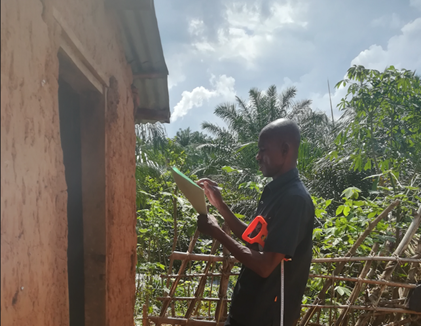
To study the adoption and effects of formal land property rights, Augustin Bergeron, Gabriel Tourek, Jonathan Weigel, and I examine in a new paper a land titling campaign we designed and implemented in close collaboration with the Provincial Government of Kasaï Central. The program sought to make land formalization simpler and cheaper by reducing the monetary and transaction costs of obtaining a land title. Government surveyors and program staff visited residents at home, measured plots, drew sketches, checked existing documents, and assembled files that would otherwise require citizens to move repeatedly through government offices. In a city where citizens often paid $1,000 or more for a title, the program capped outlays at the official price of $100. In effect, the program worked through the existing bureaucracy but reduced the costs, delays, and office visits that usually kept citizens from obtaining titles.
Inside Kananga’s government center—the bâtiment administratif that houses the Land Titling and Cadastral Offices—the material infrastructure of the state was itself revealing (Figures 1 and 2). Cadastral archives were in poor condition, with some equipment and documents dating to the colonial era, and land files were still moved through offices where signatures, stamps, and typed documents determined whether a household’s claim could be legally recognized.
Figure 1: Kananga’s government center and cadastral archives
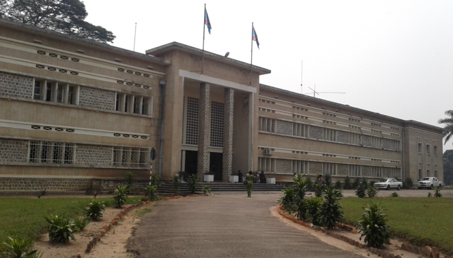

Figure 2. A surveyor measuring a respondent’s plot and a formal land title delivered during the program (certificat d’enregistrement)
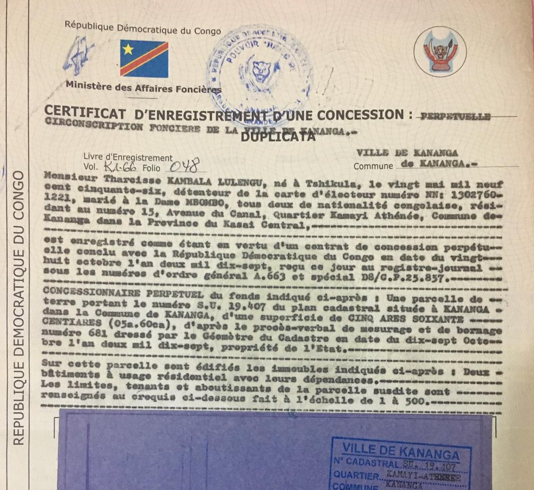
The program increased initiation of the formalization process by 44 percentage points and receipt of a formal land title by almost 14 percentage points. Overall, this suggests that high fees and red tape were binding constraints that kept citizens in informality.
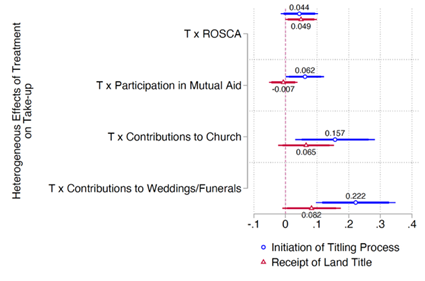
The more surprising result concerns who demanded titles. Citizens with higher baseline levels of participation in social institutions were more likely to demand a land title (Figure 3, left panel). This result counters the view that participation in institutions of informal insurance should depress demand for formal titling. But demand is not the same as acquisition. Participation in social institutions predicted who tried to formalize, not who successfully obtained a title. A similar pattern appeared with local chiefs. Citizens closer to local chiefs were more likely to initiate the titling process, suggesting that citizen-chief connections increase demand for formal rights. But politically connected chiefs reduced the likelihood that citizens in their domains completed the process, underscoring the role of chiefs’ political incentives in land matters.
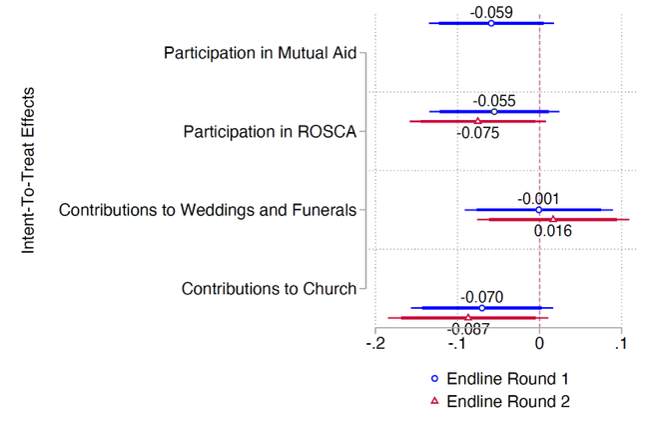
The program also had social effects: households assigned to the program participated less in some of these social institutions by the end of the study (Figure 3, right panel). Specifically, the titling program appears to have caused citizens to participate less in mutual aid societies and ROSCAs, and to make fewer contributions to churches. It also worsened citizens’ views of chiefs. These crowding-out effects go beyond previous work documenting the impact property rights have on economic outcomes, such as investment, as well as prosocial behavior and beliefs. They suggest that property rights can alter social relationships.
Figure 3. Effects on demand and receipt of titles by participation in social institutions (left) and effects of the land titling program on participation in social institutions (right)
Taken together, these results suggest that in urban contexts, informal institutions are at best imperfect substitutes for formal land property rights. Formal titles do not merely protect citizens against expropriation; they can also increase autonomy by giving citizens economic, legal, and symbolic standing outside existing social arrangements. When citizens are offered the opportunity to formalize their land, some reduce their participation in social institutions. Formalization may therefore offer, in Albert Hirschman’s terms, an exit from the informal equilibrium. Property rights can thus function as an institutional bypass, providing a pathway around existing obligations without directly altering the underlying institutions.
The broader implication is that land formalization is not only about tenure security. These results show that when formal alternatives become cheaper and easier to access, citizens may recalibrate their relationship to informal authority. In that sense, property rights can operate as exit. They can shift, however modestly, the fragile balance between state, market, and community.
Author’s Disclosure: The authors report no conflicts of interest. You can read our disclosure policy here.
Articles represent the opinions of their writers, not necessarily those of the University of Chicago, the Booth School of Business, or its faculty.
Subscribe here for ProMarket’s weekly newsletter, Special Interest, to stay up to date on ProMarket’s coverage of the political economy and other content from the Stigler Center.