


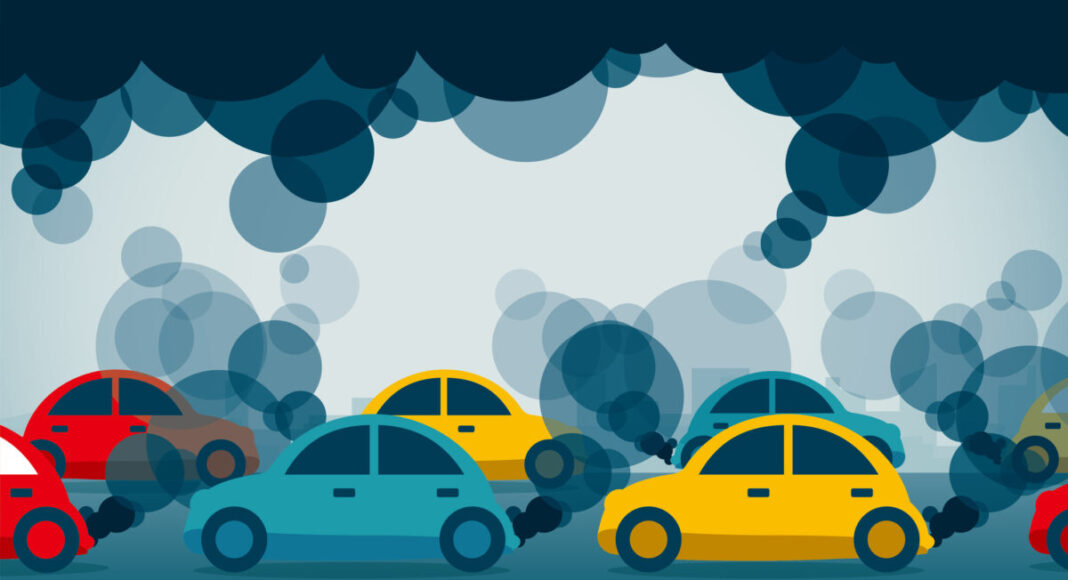

In recent research, Jorge Alé-Chilet, Cuicui Chen, Jing Li, and Mathias Reynaert find that when faced with environmental regulations, collusion among German car manufacturers reduced their expected non-compliance fines and significantly increased consumer and producer surplus. At the same time, social welfare decreased by billions of euros because of increased pollution.
Non-compliance with environmental standards is a widespread problem across industries and countries, especially in cases where compliance raises production costs or reduces profits. Yet, regulators generally assume that in such cases firms make their decisions independently of how other firms act. This raises the question of whether competing firms may actually be coordinating to jointly evade regulation, and what effects such behavior has on social welfare.
In a recent paper, we analyze a specific case in which the three large German carmakers, BMW, Daimler and Volkswagen, colluded to reduce the effectiveness of their emissions-control technology in diesel cars. The case is relevant because it is not a traditional price-fixing agreement, but a coordination on technical decisions with negative environmental externalities. This has important implications for the design of regulatory and competition policy. We thus connect two areas of economic policy that have traditionally been kept separate—environmental regulation and antitrust policy—showing how they can complement each other to maximize social welfare.
The collusion case
In July 2021, the European Commission found that the car conglomerates BMW, Daimler, and Volkswagen had violated antitrust law by colluding to restrict the effectiveness of nitrogen oxide (NOx) emissions-control technology in diesel vehicles. The companies breached the Euro 6 environmental standard, which announced in 2006 that the permitted NOx emissions limit for diesel vehicles would be halved starting in 2014. To comply with this stricter regulation, manufacturers installed in most of their diesel vehicles a tank of urea-solution fluid (DEF, or diesel exhaust fluid), which reduces NOx emissions by transforming them into nitrogen and water. However, as we show in our study, given the architecture of the vehicles, installing a 20-liter DEF tank reduces trunk space by around 16 liters.
According to internal documents and the European Commission’s findings, the three German manufacturers communicated through meetings and emails from 2006 onward to agree on what they called a “coordinated approach” to reducing the size of DEF tanks. The objective, in the words of the carmakers’ executives, was to cut costs and “leave enough room in the trunk for golf clubs.” Since the tanks were refilled annually—together with the vehicle’s annual servicing—a smaller tank meant lower DEF consumption per kilometer driven and therefore more pollution emitted. To make matters worse, most of these vehicles were equipped with so-called “defeat devices,” which caused the cars to run at lower power during the annual technical inspection. The regulator was thus left with fewer tools to detect non-compliance with the environmental standard.
The firms apparently knew that the smaller tanks did not hold enough DEF to reduce NOx emissions effectively and comply with the Euro 6 standard. The European Commission concluded that there had been explicit coordination on tank size. It therefore imposed a fine of 2.7 billion euros to be split by the manufacturers, a fine that was reduced to 875 million euros on account of leniency discounts and the unprecedentedness of a technological collusion case.
Theoretical framework
We develop a theoretical framework to understand firms’ regulatory compliance decisions (whether unilateral or coordinated) and the potential gains from coordination. In the model, firms face a pollution standard and take actions to comply with it (the size of the DEF tanks). Reducing emissions lowers firms’ profits, since it raises marginal costs and decreases the product’s appeal to consumers—for example, by decreasing trunk size. The regulator observes the firms’ compliance actions. However, the regulator does not know how those actions translate into lower emissions: it cannot continuously monitor each car’s pollution (because of the defeat devices, which sever the relationship between tank size and true emissions). Monitoring is therefore imperfect. Instead, with some probability the regulator carries out an inspection, and if it detects non-compliance, firms face sanctions that may include fines, legal costs, and reputational damage.
The model shows that coordination against regulation can only be profitable when collusion lowers the expected sanctions for non-compliance. Expected sanctions can fall either because the future sanction itself is lower or because the probability of detection falls. We identify three main reasons why sanctions or the probability of a sanction may decline: (1) “diffusion of responsibility,” whereby the sanction for a non-complying firm may be smaller when multiple violators are detected, since the full weight of the law does not fall on a single firm; (2) “shared interest,” which reduces the risk that a colluding firm will report the violation; and (3) the probability of inspection may depend on how a firm’s compliance actions compare with those of the others. The model shows that a sanction for anticompetitive conduct can complement environmental regulation by reducing the profits of firms that coordinated on the standard.
Empirical methodology
We use data on vehicle registrations, vehicle attributes, and on-road emissions in the European car market between 2007 and 2018. Our first finding is that there is evidence of widespread non-compliance across the industry, and not only by the colluding firms. The data reveal that 70% of diesel vehicles failed to meet the NOx standard, emitting on average more than three times the amount permitted by the regulation. Observed DEF tanks were roughly half the size required for compliance. This widespread non-compliance was only possible because of the mass use of the defeat devices mentioned above. We thus see that collusion in a sense moved the entire industry toward non-compliance, although in the data the colluding firms injected 8% less DEF than the non-colluding ones.
To quantify the effects of the collusion, we estimate a structural model of vehicle demand and marginal costs, incorporating abatement costs through DEF tank size choices. The results confirm that consumers would be willing to pay a substantial amount (231 euros on average) to avoid the loss of trunk space that compliance with Euro 6 would entail. In addition, our estimates conclude that, isolating other factors, consumers do not value the size of the DEF tank, so there are no demand-side incentives to comply with Euro 6. Finally, we show that increasing DEF tank volume is costly (42 euros per liter), and that these costs do not fall in the event of coordination on tank size.
Main findings
Our model allows us to compute the impact of the collusion. We estimate that the collusion reduced the expected sanctions for non-compliance for the colluding firms by between 69 million and 345 million euros, depending on the counterfactual scenario. This estimate constitutes a lower bound on the true effect, which illustrates the magnitude of the economic incentive that motivated the collusion.
A key point of the study is that banning all cooperation among firms would not be an optimal policy, since cooperation against the technical standard raises both firm profits and consumer surplus while at the same time harming the environment. The effects on social welfare therefore depend on the magnitude of the environmental damage relative to the benefits generated for consumers and firms. We show that the collusion increased both industry profits and the surplus of car buyers, thanks to greater trunk space and lower marginal costs. However, these benefits fell short of the cost associated with the increase in NOx emissions. The collusion thus reduced social welfare by between 1.57 billion and 5.57 billion euros.
The harm to social welfare implies that the 2.7 billion euro fine imposed by the European Commission compensated for the damages after the fact. However, our analysis shows that the fine was insufficient to deter future collusion against environmental regulation. This points to the need to reform sanctioning mechanisms so that they adequately reflect the social costs of collusion.
Beyond this, we evaluate the regulatory context using the framework of Yeon‐Koo Che and Jinwoo Kim, which suggests comparing the benefit of collusion to the firms and their consumers with the negative effect their actions have on the welfare of the rest of society. If the two are similar, collusion could offset the harm; if the benefits are much smaller than the damages to other parties, collusion would be highly inefficient. We conclude that the carmakers fall into the latter case, since the benefits were only 7% to 11% of the damages to the rest of society, depending on the assumptions. Another interpretation of this figure is that the European Union’s regulatory environment is far from optimal for preventing collusion: if firms expected a fine similar to the damage caused, they may not have found it financially beneficial to collude, but reducing their estimated fine to only a small fraction of those damages was enough to motivate them to collude.
Conclusion
Our study contributes to the literature on regulatory compliance and collusion by providing a theoretical and empirical framework for analyzing collusion against regulation. We might ask whether competition policy could play a complementary role in enforcing environmental regulation by counteracting the incentives to collude against standards. We caution, however, that this entails practical challenges. Unlike price collusion, where the degree of overcharge provides the basis for calculating damages and fines, coordinated non-compliance leads to excessive sales rather than an overcharge. In this case, prices would be too low or product quality too high from a social standpoint, which increases sales and hence pollution per unit sold.
We suggest three directions for improving environmental regulation: increasing fines with the number of non-complying firms in order to counteract the diffusion of responsibility; giving firms incentives to self-report non-compliance, similar to leniency programs in price collusion; and incorporating the possibility of collusion into inspection decisions. Adopting these measures could contribute to environmental protection with the sword of the competition authority.
Author’s Disclosures: The author reports no conflicts of interest. You can read our disclosure policy here.
Articles represent the opinions of their writers, not necessarily those of the University of Chicago, the Booth School of Business, or its faculty.
Subscribe here for ProMarket’s weekly newsletter, Special Interest, to stay up to date on ProMarket’s coverage of the political economy and other content from the Stigler Center.