







Two recent court rulings on casino-hotels using a shared software to fix prices reveal the importance of information exchanges as a super plus factor: an indicator of illegal conspiracy to limit trade. Roger D. Blair and Javier D. Donna discuss how these court cases and other recent lawsuits elucidate the role of the information exchange and the two vectors that determine its strength as a plus factor: data sensitivity and a give-to-get understanding among firms that if they shared their data, competitors would do the same.
Two recent court rulings shed light on the legality of pricing algorithms. In August 2025, the Ninth Circuit Court of Appeals upheld the dismissal of a price-fixing case against Las Vegas casinos that were alleged to have used Cendyn’s Rainmaker algorithm to inflate hotel room rates. On July 29, 2026, the Third Circuit revived a similar case against Atlantic City casinos alleged to have used the same software by the same vendor for the same purpose. Despite the similarities, the two courts arrived at opposite conclusions.
Some terms first, as the law uses the word “agreement” in more than one way. Section 1 of the Sherman Act prohibits contracts, combinations, and conspiracies that unreasonably restrain trade. The central example is a price-fixing agreement: an agreement among competitors, tacit or overt, on the prices they will charge. Courts treat a price-fixing agreement as illegal per se. Plaintiffs rarely have direct evidence of one, so they typically rely on circumstantial evidence. Parallel conduct, such as rivals raising prices at the same time, is not enough on its own because competitors can arrive at the same prices independently. Thus, courts look for “plus factors”: additional facts that make a price-fixing agreement more likely than independent action. Richard Posner catalogued them in his Antitrust Law.
An information exchange—the sharing of competitively sensitive information among competitors, directly or through a third party—is one such plus factors. In the Third Circuit’s words, information exchanges among competitors “are not per se illegal.” They are “a facilitating practice that can help support an inference of a price-fixing agreement.” The court cited William Kovacic and coauthors, who call information conveyed among competitors a “super plus factor.” Kovacic and coauthors rank plus factors by how strongly they support an inference of explicit collusion, and they reserve “super plus factors” for the strongest. An information exchange can also be challenged on its own independent of impact on prices, as the Justice Department has done. Courts judge these standalone information-exchange claims under the rule of reason, weighing the exchange’s harms against its benefits. We return to them below.
What distinguished the two cases was what the plaintiffs alleged about how the casinos—the defendants in each—shared their data with Cendyn. Both complaints alleged a price-fixing agreement among the casino-hotels to keep room rates above the level that competition would have produced. So, the question was whether the casino-hotels’ use of identical software reflected independent decisions or a price-fixing agreement among them. According to the complaint, each Atlantic City casino-hotel named in the lawsuit installed Cendyn’s Rainmaker software into their pricing and occupancy systems. As such, they fed the platform their current non-public room rates and occupancy on a continuous basis. The algorithm pooled these data across the participating hotels and recommended room rates, updated several times a day, and uploaded automatically into each hotel’s booking system. Each hotel understood that the rates it received were built from its rivals’ numbers and that its rivals knew the same thing. According to the complaint, the hotels charged the recommended rate about 90 percent of the time. Cendyn allowed a hotel to override the number only through special permissions available to a handful of designated staff, and reserved, in the complaint’s words, for times of “need and extreme circumstances.” Cendyn also scored each hotel on how often it overrode the recommendation. The defendants claimed that there was no price-fixing agreement because each hotel retained the authority to set its own prices. But the Third Circuit disagreed, holding that “prices are fixed when they are agreed upon,” whether or not conspirators always adhere to them.
The alleged information exchange was not the only evidence the Third Court weighed. Because parallel conduct alone is not enough, the court turned to other plus factors, and the complaint alleged many: the casino-hotels’ common and contemporaneous use of the software; room rates that rose while occupancy fell, a departure from how the hotels had priced for years; financial distress that gave them a motive to act together; their unusual incentive, as casinos, to fill rooms; a Cendyn executive’s advice to avoid “the infamous ‘race to the bottom’”; industry events, where executives met; and each hotel’s knowledge that its rivals used the same platform. The court called two of these the most significant: the hotels’ adherence to Rainmaker’s rates when cutting prices would have served their own interests, and the executive’s advice. The information exchange was the plus factor the District Court had found missing, and the Third Circuit held that the complaint plausibly alleged it. The ruling reaches only that far. It holds that the complaint plausibly alleged a price-fixing agreement, and the plaintiffs must still prove one.
The Las Vegas plaintiffs first alleged the same kind of claim: a hub-and-spoke price-fixing conspiracy, whereby competitors (the spokes) coordinate through a common party (the hub): here the hotels agreeing with one another to adopt Rainmaker and follow its recommendations. But they abandoned that claim on appeal and argued only that each hotel’s separate licensing arrangement with Cendyn had increased prices. These were vertical agreements, each between one hotel and its software supplier, rather than agreements among the hotels themselves. The Ninth Circuit rejected that theory. It said that competitors who independently buy the same pricing software have not thereby agreed with one another on prices. The plaintiffs never alleged that Cendyn pooled one hotel’s confidential numbers into the price it quoted another. Crucially, the court noted that its analysis might change if the plaintiffs had alleged that Cendyn shared each hotel’s confidential information among the licensees. The Las Vegas outcome is consistent with the two questions described next, though the Ninth Circuit did not decide the case on them. With the price-fixing claim abandoned, the court ruled only on the licensing agreement.
When is the presence of an information exchange a super plus factor?
The outcomes of both Cendyn price-fixing cases can be read through two questions about information exchange. First, how sensitive was the nature of the input data? Was it public, aggregated, and lagged, or non-public, firm-level, and current? We call this data sensitivity. Second, did each firm hand over its own numbers to get its rivals’ in return? We call this reciprocity. In another case concerning information exchange (discussed below under Agri Stats), the Justice Department called this a “give-to-get” policy. Our claim is that when a pricing algorithm runs an information exchange that answers “yes” to both questions, the exchange becomes a super plus factor: strong evidence from which a court may infer a price-fixing agreement. Whether a price-fixing agreement exists is up to the courts to decide, based on all the evidence. The two questions are a simplification. They come from reading pricing algorithms as information exchanges, which is one lens among other possibilities. Courts may weigh many other plus factors, as the Third Circuit did, and the two questions speak only to one of these plus factors: how much weight the information exchange carries. Together, the two rulings suggest how courts may weigh information exchanges in the algorithmic pricing cases now working their way through the courts.
Note what is missing from the two questions. Rainmaker recommended a price, but the presence of a recommendation is not a third question. It is evidence bearing on the two questions: it shows what the pooled data was used for, and it makes any resulting coordination easier to see. That is why Atlantic City was the stronger case. But a recommendation is neither necessary nor sufficient to establish a price-fixing agreement. A recommendation that rivals adopt is one plus factor among others. It is not the only plus factor, and it does not establish a price-fixing agreement on its own. Las Vegas had a recommendation and failed.
Competitors sharing information is not inherently anticompetitive, which is why information exchanges are not per se illegal. It can increase efficiency and cut costs. As we discuss below, many such arrangements answer at least one question in the negative because. For instance, the data may be aggregated or historical, or because anyone can buy it rather than only the firms that contribute. Commercial real estate is a good example. Deals are private, and a tenant or a small landlord negotiating a lease doesn’t know what a fair price is. A data platform reporting actual rents lowers the cost of searching for tenants. It also lets rivals learn what everyone else is charging and settle on a number. That is why courts look at what data moved and who got it back, rather than whether a computer was involved.
Two algorithmic pricing cases in the courts
Two other algorithmic pricing cases show how the two questions apply and their limitations.
In the first, a group of commercial tenants sued CoStar, the dominant data service in commercial real estate, along with the largest brokerages that feed it, alleging a hub-and-spoke price-fixing conspiracy with CoStar as the hub and the brokerages as the spokes. According to the complaint, CoStar collects and redistributes detailed confidential data. The complaint does not allege that CoStar recommends prices. It alleges that the brokerages hand over their clients’ non-public lease terms, rents, concessions, and space allowances in exchange for similar data from their rivals. Each handed its data over, the complaint alleges, knowing that its competitors were contributing and receiving the same kind of information, and against its own interest in keeping its data private. Acting against self-interest is itself a plus factor. The complaint, filed this past June, estimates that each point of CoStar’s market share correlated with an increase in local rent between 0.3 and 0.8 percent per square foot over the past decade. CoStar denies the allegations. The alleged exchange of each brokerage’s data for its rivals’ data answers both questions the way Atlantic City did. The plaintiffs will still have to prove a price-fixing agreement. The complaint offers the rent estimate as evidence of the alleged conspiracy’s effect on rents. No court has yet ruled on whether the complaint plausibly alleges a price-fixing agreement.
In the second, the Federal Trade Commission sued Amazon in 2023, alleging, among other things, that a secret pricing algorithm codenamed “Project Nessie” was an unfair method of competition. According to the complaint, Nessie identified products for which it predicted other online stores would follow Amazon’s price, raised Amazon’s price, and kept it there when Amazon’s competitors did. Amazon ran Nessie continuously with two exceptions: the holiday season and Prime Day. Amazon used Nessie to set prices on more than eight million products in April 2018 alone. The complaint attributes roughly one billion dollars in excess profit to Amazon from the algorithm alone and alleges Amazon paused it in 2019 as regulatory scrutiny grew. Amazon denies the allegations. In a co-authored work, one of us estimates that Nessie raised Amazon’s prices by 2-2.5 percent, and reduced consumer welfare by 0.7-2.5 percent depending on how far rival platforms matched Amazon’s price increases.
But Nessie answers no to both questions: the data was public, and nothing moved between competitors. Amazon watched prices its rivals had already posted in public and raised its own accordingly. There was no pool of confidential data and no information exchange. Amazon acted alone.
Instead of relying on Section 1, the Federal Trade Commission charged Amazon under Section 5 of the FTC Act, which reaches unfair methods of competition and does not require any agreement. Watching and reacting to a rival’s posted price is not, by itself, a price-fixing agreement. Without an information exchange or other evidence of a price-fixing agreement, Section 1 has nothing to reach, which is consistent with the FTC’s choice of a different statute. Nessie also shows the limit of the two questions: they measure Section 1 exposure only. According to the estimates by Donna and Gutierrez, Nessie significantly raised Amazon prices and reduced consumer welfare, but Section 1 still has nothing to reach.
Remedies highlight the role of the two questions in upending information exchanges
CoStar and Nessie show how the law approaches information exchanges to explore algorithmic pricing cases under Section 1. The Justice Department has gone further, challenging information exchanges on their own. These are standalone information-exchange claims. They require no proof of a price-fixing agreement, and courts judge them under the rule of reason. In the DOJ’s words, “standalone information-sharing claims are subject to a flexible rule-of-reason analysis.” In these cases, the two questions bear on a different issue: whether the information exchange itself unreasonably restrains trade.
. In 2023, the Department of Justice sued Agri Stats, a data hub that acts as a clearinghouse collecting, classifying, and auditing sensitive data regarding price, inventories, and quantities about the meat processors that supply it. The DOJ alleged that the information exchanges Agri Stats operated among competing meat processors unreasonably restrained trade in violation of Section 1. It alleged that Agri Stats collected competitively sensitive information from processors, reported it back in a form that let recipients identify individual competitors despite claims of anonymity, and thereby helped them coordinate decreases in output and increases in prices. It also alleged that Agri Stats’ “give-to-get” policy, which gave access to the reports only to processors that contributed data, added to the harm. The proposed settlement, made this past May, bans the sharing of sales reports and other non-public pricing information among competing processors, bars the sharing of most data at the facility or company level, requires figures at least 45 days old on average, and requires Agri Stats to make most information available for public purchase. Those terms limit data sharing to less-sensitive information and break the give-to-get loop because anyone can now buy the reports, rather than only the processors who supply them. The ban on facility- and company-level data is about anonymity rather than headcount. Pooled across enough firms and reported in broad bands, a report tells a processor what the industry is doing without telling it what any particular rival is doing. That is the difference between a market statistic and a rival’s price. The settlement is proposed and awaits the court’s approval.
The DOJ’s case against RealPage, a landlord rental management platform, shows a similar focus on data and pricing. According to the Justice Department, RealPage’s software recommends rents to competing landlords, built from the non-public leasing data those landlords supplied. The DOJ sued in 2024, alleging, among other things, that RealPage violated Section 1 by sharing competitors’ information for use in their pricing, and RealPage agreed to settle in November 2025. The proposed judgment bars the software from using competitors’ non-public data to set rents and from training on active lease data, while leaving public data untouched. The line the decree draws is between non-public and public information, not between algorithmic and manual pricing. The decree targets the inputs, which a court can police. Cut off the rival’s data and the recommendation loses what made it a coordinating device. Like the Agri Stats decree, it is a proposed settlement, and no court has ruled on the merits. However, the two cases show how regulators focus on the data sensitivity and “give-to-get” aspects of information exchanges.
Where the rule comes from
The recent Third and Ninth Circuit Court cases suggest how future algorithmic price-fixing cases may be decided. However, much of this was already clear from the long history of information-exchange cases, beginning with American Column & Lumber v. United States. In 1918, a group of hardwood manufacturers controlling about a third of the country’s hardwood output formed the unincorporated “American Hardwood Manufacturers’ Association.” The association created an “Open Competition Plan,” whereby members mailed in extremely detailed reports regarding their business operations. These reports included information about prices, production, and inventories. Then, the association’s manager made recommendations about future prices and production decisions. The recommendation is therefore not new either. What Rainmaker did for the casino-hotels, a man with a pencil did for the hardwood manufacturers. The defendants argued before the Supreme Court that recommendations alone could not amount to a conspiracy without evidence that members had promised each other to comply. The Court held that the Plan violated the Sherman Act by restricting competition and raising prices. The case predates the modern vocabulary of plus factors and the rule of reason. The Court condemned the Plan itself, reports and recommendations together.
Later decisions narrowed the holding. In Maple Flooring, decided four years later, the Supreme Court distinguished American Column and upheld an exchange covering only past and closed transactions, summarized so that no member could be identified with any specific figure. In U.S. Gypsum, it held that the legality of an exchange depends on the structure of the industry and the nature of the information shared. Data that is public, aggregated, or stale is generally less concerning. Data that is current, firm-level, and confidential presents greater antitrust risk. Our two questions address the nature of the information. They leave out the structure of the industry, which Gypsum treats as equally important. A map built on the two features of the data, which we create in the next section, cannot tell a concentrated market from a fragmented one.
Gypsum makes sensitive data a condition, not a conclusion. Las Vegas is consistent with it: the data was sensitive, but no exchange among the hotels was alleged. When the Third Circuit reasoned through Gypsum and Todd v. Exxon, it was applying doctrine that begins with the 1921 case. Todd was itself a standalone information-exchange case, about salary data shared among oil companies. The Third Circuit borrowed its description of an information exchange as a facilitating practice. Sensitive data alone is not enough. The data must also move among competitors. That is what the Las Vegas plaintiffs did not allege: each hotel sent its numbers to Cendyn and received a recommendation, but the complaint did not allege one hotel’s numbers fed another hotel’s price.
A map
We’ve created the map below to show where the cases and lawsuits sit on the two questions we’ve identified. For the price-fixing cases, placement shows how much weight the information exchange carries as a plus factor. For the standalone information-exchange cases, it tracks the nature of the information that the rule of reason examines. The vertical axis is data sensitivity: it goes from public, aggregated, and lagged at the bottom to non-public, firm-level, and current at the top. The horizontal axis is reciprocity: it runs from one-way reporting to a give-to-get loop. American Column, RealPage, CoStar, Agri Stats, and Atlantic City are in the danger zone, high on both axes. Project Nessie is in the lower risk zone, low on both. Between them are the ordinary arrangements that fill most markets: compensation surveys, industry price indices, trade association benchmarking. A survey built on aggregated, historical figures sits low on both questions. The same survey built on current, firm-level numbers that only contributors receive sits high on both.
Las Vegas is the instructive one. The data was as sensitive as in Atlantic City, so it sits just as high. But the complaint did not allege a give-to-get loop, so it is far to the left.
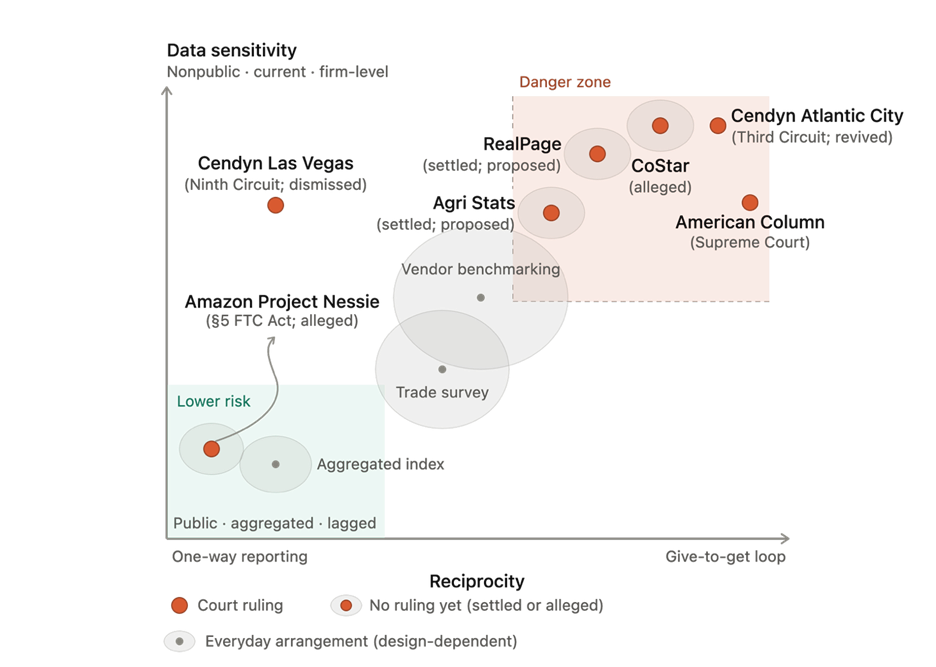
Figure 1. Where an information exchange sits under Section 1 of the Sherman Act.
Placement reflects exposure on the two questions, not adjudicated liability; conduct in the green lower-risk zone may still face other antitrust scrutiny.
Pricing algorithms are new machinery for an old question. The hardwood association in American Column & Lumber needed a manager, a mailing list, meetings, and members willing to put their prices in writing. Computers and software made all of that cheap. A platform can now collect non-public numbers from every competitor in a market and hand each of them a price, with no meeting and no phone call. What has not changed is what courts ask about information exchange: how sensitive are the data, and does each firm give its own numbers to get its rivals’. Courts have been asking versions of those two questions since 1921, and they were asking them again in Atlantic City and Las Vegas.
These cases are at different stages, and none has produced a merits ruling. The Atlantic City ruling only lets the plaintiffs proceed. The Las Vegas case is finished: the Supreme Court declined to hear it in April. The CoStar suit was filed only in June. The Agri Stats and RealPage judgments are still proposed.
Still, the recent decisions affirm what has long been precedent. They suggest where the courts and enforcers will look when a pricing algorithm is alleged to facilitate a price-fixing agreement: the sensitivity of the data and what each firm gets back for handing it over.
Author’s Disclosures: The authors report no conflicts of interest. You can read our disclosure policy here.
Articles represent the opinions of their writers, not necessarily those of the University of Chicago, the Booth School of Business, or its faculty.
Subscribe here for ProMarket’s weekly newsletter, Special Interest, to stay up to date on ProMarket’s coverage of the political economy and other content from the Stigler Center.