






Not sure how to cash in those bookstore gift cards? Here are ten suggestions from the Stigler Center staff.
1. Stuck: How the Privileged and the Propertied Broke the Engine of American Opportunity, by Yoni Appelbaum. Penguin Random House.
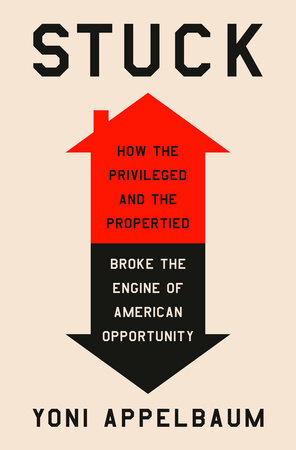
For much of their history, Americans were a people on the move. In the late 19th century, a third of them changed houses every year. Today, a mere twelfth of Americans move annually. In Stuck: How the Privileged and the Propertied Broke the Engine of American Opportunity, Yoni Appelbaum contends that Americans’ mobility was among the secret ingredients to their economic success. In the past, citizens could literally move to chase opportunities as new industries grew. Yet today, a century of restrictive zoning has arrested that dynamism. Appelbaum crafts a novel and compelling contribution to the well-discussed topic of the American housing crisis, revealing that it is not merely an affordability problem, but a mobility challenge as well.
2. Every Screen on the Planet: The War Over TikTok, by Emily Baker-White. W. W. Norton & Company.

The saga over TikTok’s operations in the United States and the resulting ban, moratorium on said ban, and eventual sale is one of the most baffling and engrossing stories in recent times. The ingredients: K-Pop fans, billionaire donors, attempts to win over lawmakers, active spying on journalists, a theatrically long Congressional hearing complete with the memorable zinger of “Senator, I’m Singaporean,” a 352-65 vote in the House (in these partisan times, no less) to ban TikTok and a 9-0 Supreme Court decision upholding the ban (followed by the president’s decision not to enforce it), aggressive proactive corporate messaging to all U.S. TikTok users, and a new consortium of owners. Every Screen on the Planet: The War Over TikTok is the first notable work to document the ways in which media, international relations, tech competition, and corporate influence campaigns clashed to produce one of the biggest stories of the year.
3. Capitalism: A Global History, by Sven Beckert. Penguin Random House.
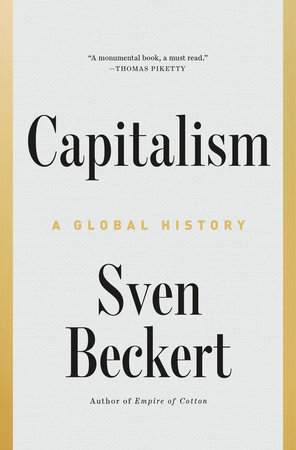
In the public imagination, capitalism often sprouts sometime with industrialization in 18th/19th-century England. In Capitalism: A Global History, Sven Beckert reconceptualizes capitalism as a millenia-old global phenomenon. He begins his story in the 12th-century Yemeni city of Aden. From there, he guides the reader across centuries and continents to trace capitalism’s development from a network of merchants on the periphery of society to today’s world-devouring system. Capitalism: A Global History challenges the Eurocentric histories of capitalism and its reductive definitions to present one of human history’s most controversial programs as a diverse yet interconnected and ever-evolving system.
4. Enshittification: Why Everything Suddenly Got Worse and What To Do About It, by Cory Doctorow. MCD.

At the turn of the 21st century, Silicon Valley’s titans appeared to be inventing a techno-utopian future. Two decades later, that promise has decayed into a world of pointless mandatory apps for “smart” products, ubiquitous surveillance, platforms saturated by AI slop, and ever higher subscription fees. Enshittification: Why Everything Suddenly Got Worse and What To Do About It explains how digital platforms capture users through initially attractive and quality services and then deliberately worsen their offerings once they become monopolies.
5. Murder the Truth: Fear, the First Amendment, and a Secret Campaign to Protect the Powerful, by David Enrich. Mariner Books.

Under the United States Supreme Court precedent set in Times v. Sullivan, journalists and their organizations are protected by the First Amendment from libel or defamation lawsuits, unless it can be proved that they acted with “actual malice” or “an intentional disregard for the truth.” Murder the Truth: Fear, the First Amendment, and a Secret Campaign to Protect the Powerful details the long-standing campaign to overturn these legal protections and what their implications could be for U.S. media organizations across the political aisle, for outfits large and small, established or upstart, as well as for independent influencers and writers—essentially, any source of news in today’s day and age.
6. How Progress Ends: Technology, Innovation, and the Fate of Nations, by Carl Benedikt Frey. Princeton University Press.
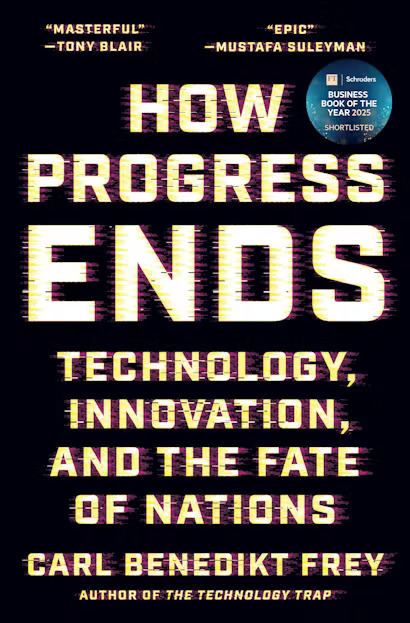
Economists and social scientists are proclaiming the end to neoliberalism and its steadfast prescriptions of deregulation and liberalization as we witness a rise in global populism on the right and left. Now, they search for the parameters of a political economy to take its place and create the inclusive growth that the Washington Consensus failed to provide. In his trek through history, Carl Benedikt Frey tries to identify how state bureaucracy and decentralization (of both the state and free markets via unfettered competition) enables growth and innovation. How Progress Ends provides a timely discussion of why an active state is necessary for economic growth and the ways in which the state can both boost growth and grind it to a halt.
7. The Second Estate: How the Tax Code Made an American Aristocracy, by Ray Madoff. University of Chicago Press.
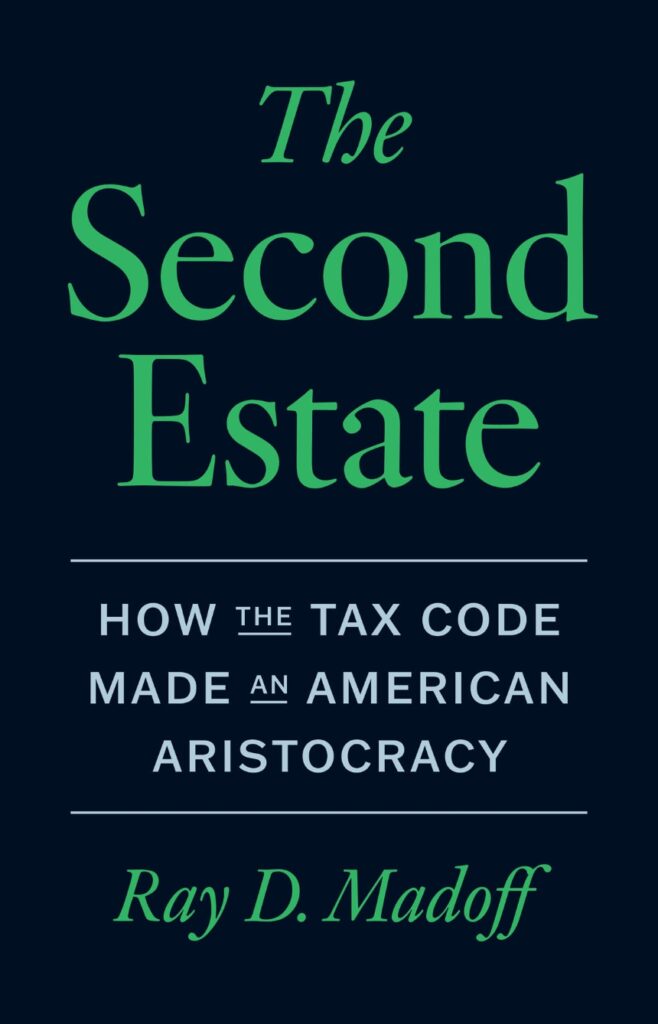
In diagnosing the causes of the French Revolution, historian Alexis De Tocqueville identified “the most odious of all these privileges” of the Second Estate nobility to be “exemption from taxation.” In The Second Estate, Ray Madoff evocatively warns that the United States now has its own privileged caste in the form of billionaires such as Elon Musk and Jeff Bezos, for whom taxation has become optional as they avoid earning taxable income. Instead, they take their compensation in stocks, which they can then borrow against for liquidity. As long as those stocks remain unsold, capital gains taxes do not apply, and upon death, the hoard of treasure can be passed on to heirs tax-free because the estate tax has been effectively nullified. Put that all together, and today’s billionaires do indeed have the same odious exemption from common taxes as the old French nobility.
8. The Division of Rationalized Labor, Michelle Jackson. Harvard University Press.
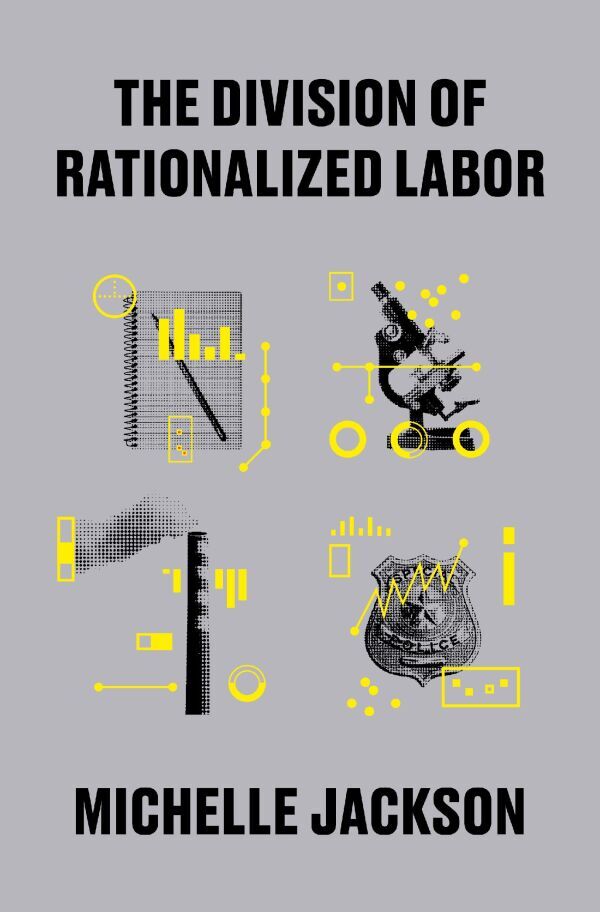
A fundamental precept of neoclassical economics is that efficiencies are to be gained through a division of labor that allows workers to specialize in a simpler portion of the production supply chain. Fordism and the assembly line, in which each worker contributes a specific input, turned the United States into an industrial powerhouse in the 20th century, and factories worldwide adopted it. Against this presumption that capitalism is pushing workers to specialize and simplify, Michelle Jackson argues in The Division of Rationalized Labor that many jobs have actually become more complex since the 19th century. This contrarian dynamic explains a host of social controversies, including why doctors today are wading in on gun violence and police officers are tasked with dealing with mental health and homelessness.
9. Abundance, by Ezra Klein and Derek Thompson. Avid Reader Press.
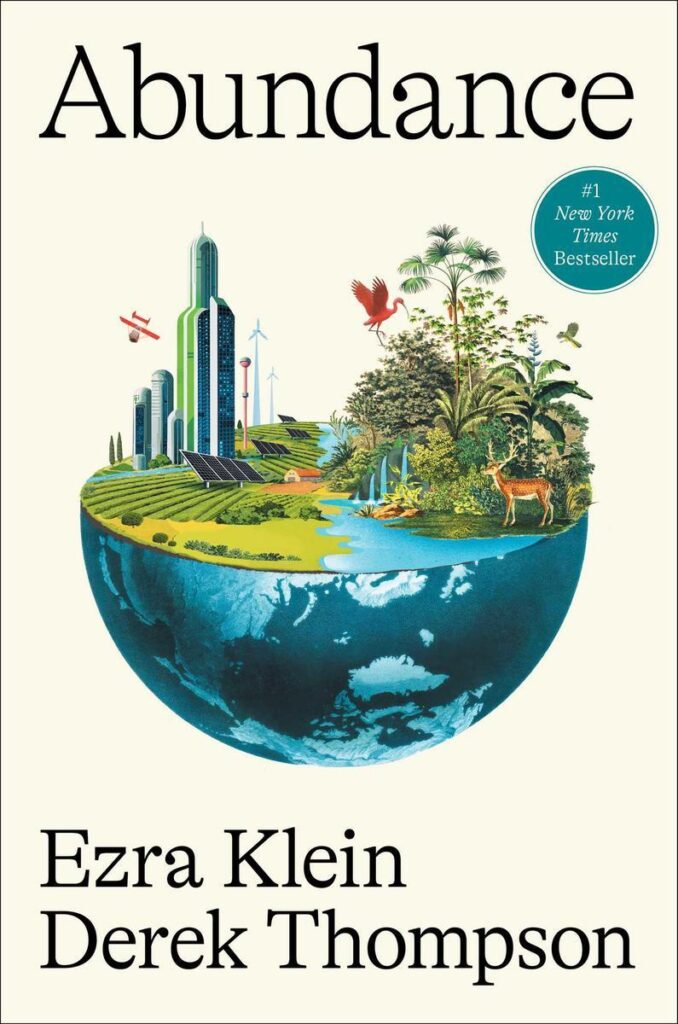
The real curiosity of Abundance’s popularity among the center left is that its core idea is little more than a rebrand of the Third Way economic policies that gained momentum among American liberals under President Bill Clinton. To fix capitalism’s shortcomings, government policy should focus on unleashing the benefits of private markets. Cutting red tape is the priority, though Ezra Klein and Derek Thompson recognize the government’s role in supporting new markets and limiting the worst of free market externalities like pollution. Abundance’s real consequence is less academic and more cultural as it becomes the rallying cry of a center left searching for answers to progressives like Zohran Mamdani and President Donald Trump’s MAGA movement. Ten years from now, will history remember Abundance as the platform by which the Democratic Party reasserted sane economic policy over the populism of the right and left, or will Abundance be remembered as the moment when the hitherto leaders of the Democratic Party finally ran out of ideas?
10. Outclassed: How the Left Lost the Working Class and How to Win Them Back, by Joan C. Williams. St. Martins Press.
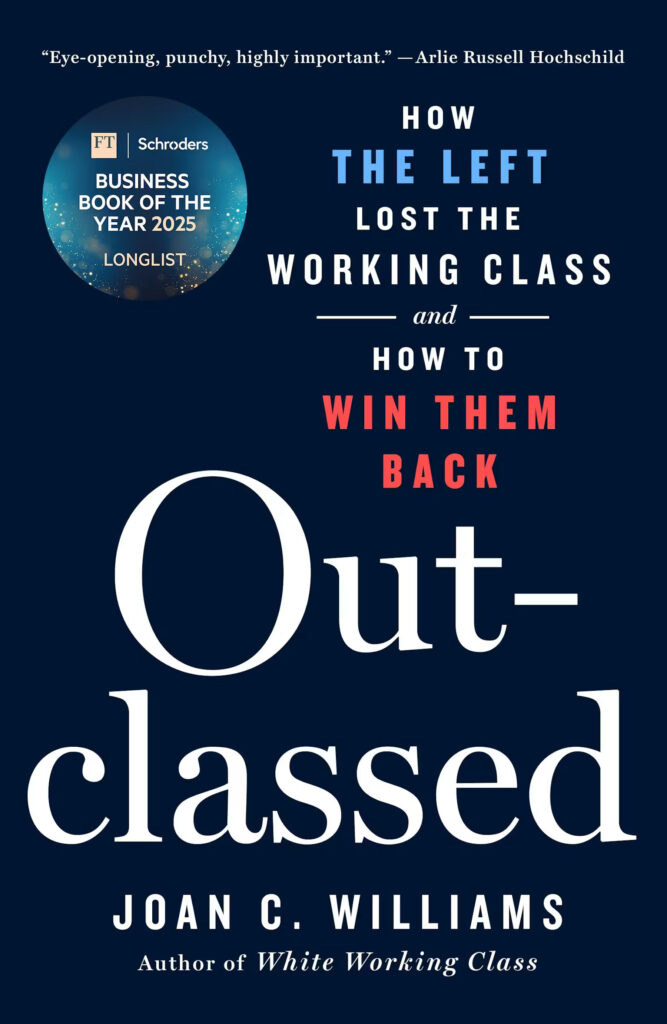
Joan Williams offers refreshing insight into why the Democratic Party, which working-class Americans predominantly supported for most of the 20th century, has alienated those same voters in the 21st. The key here is to understand that class is more than a matter of household income, but also about a specific set of values, language, and modes of living. Viewed in this light, the Democrats lost the working-class, not because they failed to be sufficiently populist in their social spending programs (e.g. “Bernie would have won!”), but because Democrats forgot how to talk like normal people to normal voters.
Articles represent the opinions of their writers, not necessarily those of the University of Chicago, the Booth School of Business, or its faculty.
Subscribe here for ProMarket’s weekly newsletter, Special Interest, to stay up to date on ProMarket’s coverage of the political economy and other content from the Stigler Center.