


Victor Jiawei Zhang revisits the 2025 United States ban on TikTok and explores how it represented a case study of how the government led users to act collectively to override network effects and introduce competition to the digital market. The case study highlights research from his new article, “Digital Antitrust Collectivism,” where he explores the possibility that users’ collective power can invigorate digital market competition.
The TikTok ban that President Joe Biden implemented in the waning days of his administration in January 2025 has become a case study for the limits and tradeoffs between free speech and national security, framed within the conflict of Sino-American geopolitics. However, what has gone underdiscussed is how the ban represents one of the most unique interventions into digital markets to date. Over several days in January 2025, the government overrode the network effects that maintain digital platforms’ market power by limiting TikTok’s access to the market, and masses of users subsequently migrated to competing platforms. As regulators discuss the difficulties of introducing competition into digital markets, where such network effects raise barriers to competition, the TikTok ban inadvertently provides lessons for how users can be empowered to overcome them.
The story reviewed
Since TikTok’s explosive growth in the United States starting around 2019, U.S. officials have worried that the Chinese government could compel ByteDance, TikTok’s Chinese owner, to hand over data on its 170 million American users or weaponize TikTok’s algorithm to shape American public opinion. In April 2024, after years of inconclusive negotiations and failed executive orders, Congress passed a bill giving ByteDance 270 days to either sell TikTok’s U.S. operations to a non-Chinese buyer or face a total ban. The deadline passed and the ban went into effect on January 19, 2025, the day before President Donald Trump’s inauguration. Although Biden opted not to enforce the ban but leave it to Trump’s discretion, TikTok preemptively suspended services in the U.S. and app stores removed it for its U.S. users.
In the few days before and immediately after the blackout, roughly three million American TikTok users migrated to RedNote (also known in Chinese as Xiaohongshu), a Chinese social media and e-commerce platform that blends short-form video with lifestyle content. By choosing RedNote, American TikTokers sent a pointed message to the government: they rejected the government’s national security framing. Many TikTokers were furious because they relied on the platform for their livelihoods. According to a survey conducted in summer 2024, only 32% of U.S. adults supported it.
However, the momentum lasted barely a few days at its most acute. On January 20, the first day back in office, Trump signed an executive order directing the Justice Department to suspend enforcement of the ban for 75 days, which was repeatedly extended until a deal was made in January 2026. TikTok reappeared in app stores almost immediately following the executive order, and users returned. RedNote’s U.S. daily active users, which peaked at 32.5 million during the ban, plummeted by 54% in a single day after the TikTok ban was lifted.
The episode revealed the mechanism to overcome platform network effects that antitrust scholars and policymakers have long sought in order to address competition and consumer protection issues in digital markets. Collective action can be induced to flip network effects and encourage user exit to competing platforms, thus checking the power of tech giants and easing competitor entry and growth. In this case, the inducement came from the government, but the model shows how collective action can be enabled through other avenues.
Generalizing “TikTok ban” as a novel competition policy model
(a) Government as Users’ Representative
The TikTok ban, stripped of its national security and geopolitical framing, offers a novel template for digital market governance. When the government’s ban, even if unenforced, led TikTok to shut down services in the U.S. and app stores to remove TikTok from their platforms, it effectively acted as a representative of all TikTok users and an organizer of collective user exit.
This is an entirely new regulatory function. Traditional antitrust policy is concerned mainly with horizontal market structure. It rarely touches grassroots consumer power and the vertical seller-buyer power gap. By contrast, the government’s ban coordinated collective action by forcing the exit of all individual users, who would otherwise be unable and even unwilling to leave, due to network effects and the value they receive from being on the same platform as others.
Certainly, the TikTok ban was an imperfect and controversial exercise of government power. But the lesson derived here is that a government-organized platform stoppage is possible, and it produces observable positive effects on digital market competition that other regulatory tools do not.
(b) Enabled Users’ Collective Action
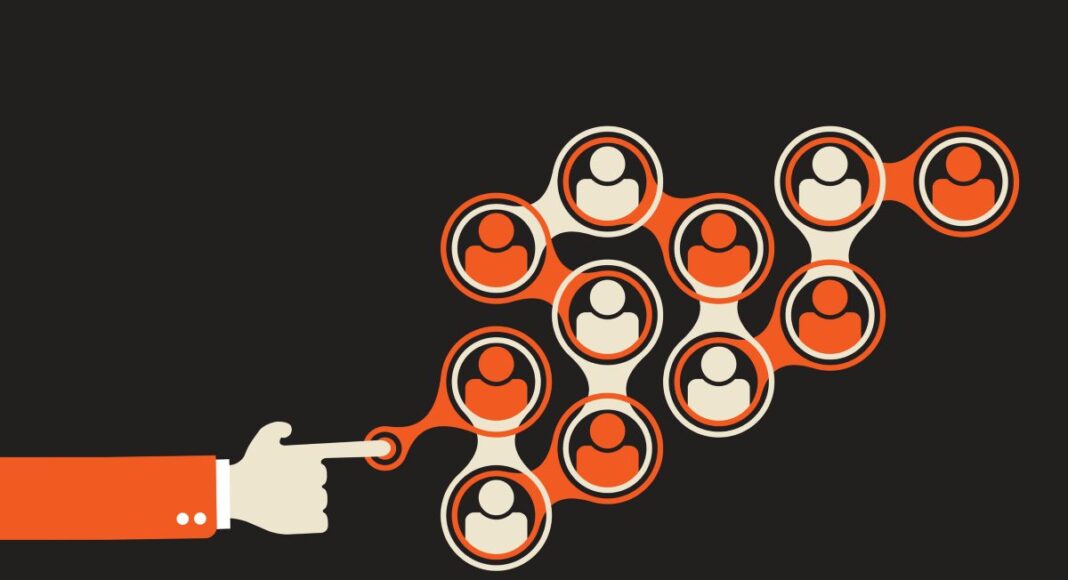
The TikTok ban is not only about what the government did but also how users respond collectively. In a matter of days, millions of Americans made simultaneous decisions to migrate from TikTok to RedNote. They switched with their followers, their data and content, and, even more importantly, their valuable, scarce attention. This collective action can be understood as the digital equivalent of a labor strike: a coordinated withdrawal of the inputs upon which a dominant platform’s market value entirely depends.
This is precisely what ordinary antitrust policy cannot engineer. The core failure of digital market regulation, in my view, lies largely in the lack of mechanisms to empower users collectively to bridge the power gap between vertical platforms and their users. Notice-and-consent regimes that inform users how their data is being used empower users only in theory, but virtually never in practice. Data portability rules give individual users the right to port their data, but a single user’s data is worth almost nothing to a competitor that lacks a sizable user network and database, and worth nothing to a user who gains value from being on the same platform as friends and family. Rules to empower users as atomized individuals, rather than social beings, in a world governed by network effects are functionally insufficient.
Users in the highly networked digital economy are locked in not because no alternative platforms are available, but because switching platforms alone inevitably incurs high sunk costs, such as losing connections, content visibility, and hard-earned reputation. The TikTok ban demonstrated that such lock-in is contingent. When moving collectively, though involuntarily, users take the network’s essential value with them. That is undeniably a competition fact of the first order.
(c) Flipped Network Effects as a Leverage
Network effects contribute to digital monopolies’ incumbency. The more users a platform has, the more valuable it becomes, thereby attracting more users and enabling more data collection, which, in turn, makes it even more valuable. This notorious feedback loop is what makes digital incumbency so durable and the market entry so difficult. It is also why traditional antitrust analysis often fails to restore digital market competition. Antitrust enforcers can punish a platform without touching their network, the real asset that makes it dominant.
The TikTok ban revealed the other side of this dynamic. Network effects that entrench dominance can, when users’ collective action is initiated, be “flipped” against the incumbent, which is also known as “negative feedback effects.” When users collectively depart with their data, they strip the platform of its core asset. For a brief window before and after January 19, RedNote was growing extraordinarily fast simply because TikTok’s entire network was, functionally, migrating in real time. In a networked platform, competition is not “one click away.” It is collective clicks away.
The platform stoppage is a powerful tool that current competition policy, unfortunately, has not sought to leverage. A credible threat of collective exit—whether initiated by users themselves, facilitated by a rival, organized by the government, or by other elected users’ representatives—acts as a Sword of Damocles that disciplines dominant platforms, thereby fundamentally transforming the power dynamic between platforms and users. Under the shadow of that threat, incumbent platforms face an all-or-nothing dilemma: self-discipline or mass defection. The TikTok ban showed that the dilemma can be made real.
Promises and perils of platform stoppage
The platform stoppage as a competition policy model is real but underexplored. The TikTok ban, as an unintended case, illustrates both the promises and the perils of this novel regulatory tool.
The most obvious promise of platform stoppage is its market-invigorating function. The TikTok ban produced a scale of user migration that years of antitrust enforcement, data portability mandates, and interoperability had failed to generate. It exposed the contingency of platform dominance in a way that no traditional antitrust enforcement could. Competition in the digital market happens suddenly, when the conditions for collective switching are either naturally or artificially created.
However, the TikTok ban also demonstrated the peril of platform stoppage as a top-down, government-organized instrument. Top-down interventions are by nature centralized, coercive, and insensitive to the wide range of users’ needs. With the TikTok ban, users’ diverse and fundamental interests were subordinated to the broader geopolitical concerns that they largely did not share. Users chose another Chinese-owned platform precisely to signal their rejection of the government’s framing. In this sense, the federal government lacks sufficient legitimacy in representing all U.S. TikTok users and initiating the platform stoppage.
As a result, the lack of legitimacy rendered the platform stoppage ineffective and collective action vulnerable. Once the TikTok ban was lifted, users returned, and the fledgling countervailing power dissipated quickly, failing to produce lasting change in the digital market. A fundamental reason is that the ban was not rooted in any institutional mechanism for users to organize and exercise leverage collectively and voluntarily.
Lessons to be collected
The TikTok ban serves merely as a rudimentary framework for the platform stoppage. To institutionalize this policy, policymakers and regulators need to carefully answer: (1) who has the legitimacy to represent users, initiate the platform stoppage, and organize collective action; (2) under what conditions would a platform stoppage be sufficiently justified; (3) how long should a platform stoppage last to sufficiently sanction a platform that transgressed some social or national good and simultaneously open a window of opportunity for competitors to thrive.
The correct organization of platform stoppage should lie within the spectrum defined by top-down, centralized regulation at one extreme and bottom-up, atomized user empowerment at the other. Just as 20th-century labor law created the institutional infrastructure for workers to collectively organize, bargain, and strike in a specific unit, digital antitrust policy should create a similar infrastructure for users to act collectively to demand, for example, better privacy conditions or less manipulative content from the digital giants.
The TikTok ban was an accidental experiment of a novel antitrust tool. It demonstrated that platform dominance is not inherently permanent, and that user representatives can play a vital role in organizing collective user action to flip the network effects. What competition policy now needs is to institutionalize platform stoppage as a novel antitrust tool for a vigorous digital market environment.
Author Disclosure: The author reports no conflicts of interest. You can read our disclosure policy here.
Articles represent the opinions of their writers, not necessarily those of the University of Chicago, the Booth School of Business, or its faculty.
Subscribe here for ProMarket’s weekly newsletter, Special Interest, to stay up to date on ProMarket’s coverage of the political economy and other content from the Stigler Center.